A Jewish Agroecology Movement in the UK - Meet the People Building It
Words by Pelin Turgut and photos by Talia Woodin.
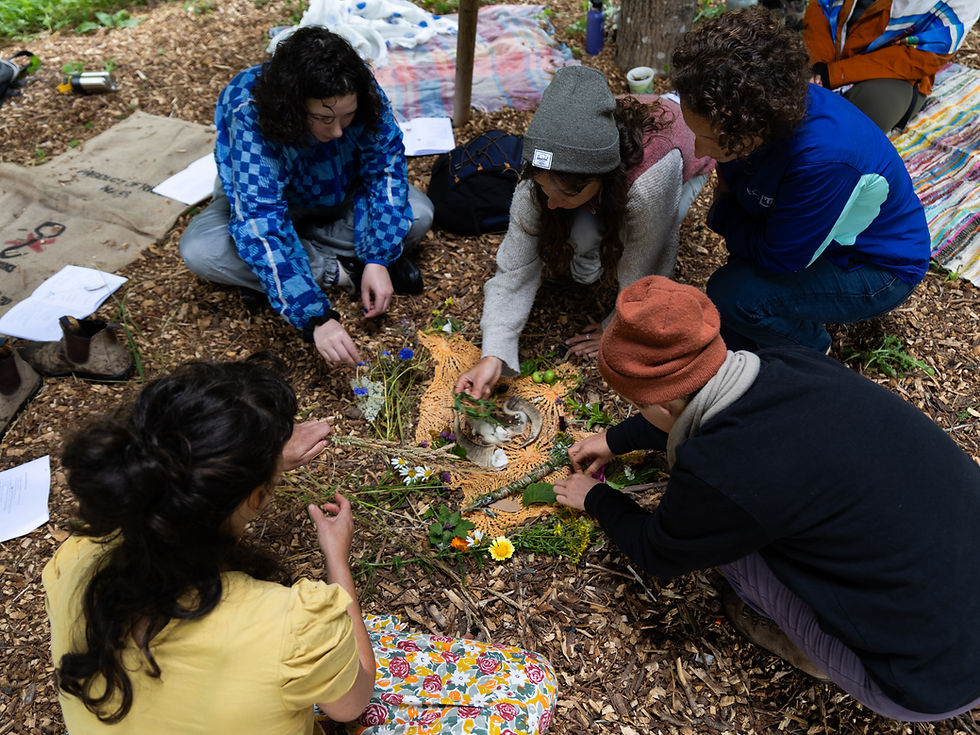
It's a Friday evening in rural Dorset. As the sun sets over organically managed fields, a group of farmers, volunteers and participants at Radical Farm Camp pause their work and gather to observe Shabat, the Jewish day of rest.
Over the course of the week, they've had their hands in the soil, learned agroecological skills, shared dishes drawn from Jewish diaspora, and explored what the Torah has to say about how we relate to land. For many, it's unlike anything they've experienced before.
Radical Farm Camp is the integral annual event of Miknaf Ha'aretz, a Jewish organisation founded in the UK in 2020 by Samson Hart and Sara Moon. It exists at an unusual and important intersection: cultural identity, diaspora experience, and land. Through agroecological practice, radical solidarity and Jewish learning, it offers communities a way back to something many didn't realise they'd lost.
“At Radical Farm Camp, we gather on different farms in the UK,” says Sara. “People get to get their hands in the soil, learn amazing agroecological skills, and then we'll also explore Jewish culture, food and identity and land, prayer and practice.”
Finding each other, finding the work
Sara and Samson share a background as food growers, working in market gardens. Their paths converged after each had, separately, been transformed by time spent at a progressive Jewish organic farm and community centre in the US. Returning to the UK, they joined forces and began reaching out to Jewish communities across the country, through events, shared meals, and a zine publication, to see whether others were hungry for what they'd found.

The vision they wanted to offer was specific: a land-based approach that honoured Jewish identity and values, affirmed belonging in the diaspora, whilst also being committed to Palestinian solidarity. "We both have had experience in Palestine, in the West Bank, witnessing the occupation and the violence of the Israeli state," says Samson. "We wanted to challenge that. But we also need to have a positive Jewish identity here in the UK, to direct our energy towards a different idea of Jewish liberation."
The response from communities across the country was striking. Miknaf Ha'aretz found itself becoming a kind of spiritual and political home for Jewish people who had felt displaced from institutional Judaism, by their politics, their queerness, or their relationship to the natural world.
"For a lot of people, it's like a last tether to their Judaism," says Samson. "They've really found home and belonging, spiritually and politically, in what we're offering."
"So many people don't even necessarily know that that's something they've needed," adds Sara, "but it now feels like the most obvious thing in the world."
Small grant, large impact
Miknaf Ha'aretz became a Community Interest Company in 2022. In 2024, they received £10,000 in New Growth funding from Farming the Future, a fund designed to bring more diverse organisations into the agroecology movement.
At the time, they were still finding their feet. "We were still quite emergent," says Sara. "We were offering something that really met community need. The Farming the Future funding allowed us to take a bit more time to really reflect on our strategy, to explore, as we entered intense times in the world, how we can be most effective."
What made the grant unusual wasn't just the money. The funding came with strategic and facilitated support, and it was explicitly intended for long-term thinking rather than project delivery. "It felt like there was a real effort made to understand our work and to help us articulate it, to help us draw it out," says Sara. "That felt really unique."
The focused nature of the support pushed Miknaf Ha'aretz to set up structures they'd been circling around: a steering group, a membership programme, a new website. All are now in place. "It isn't a lot of money for a lot of organisations," says Samson, "but for us at the time, it was significant. And because it was targeted, because the idea was to support our strategy and our deeper long-term thinking, we felt obligated to do that work. Whereas if we'd just received project or core funding, we might not have put as much effort towards those structures that are now allowing us to do this next layer of work."
That next layer is ambitious. "We want to respond to these times — in the Jewish community, but also to what's happening with the rise of the far right," says Samson. "We want to offer a deeper, solidarity-focused, anti-racist approach."
The Farming the Future funding also gave them something harder to quantify; credibility and connection. It helped them enter the wider agroecology network, open doors to new relationships, and strengthen the case for further investment. In 2026, they also secured funding from the Paul Hamlyn Foundation.
What comes next?
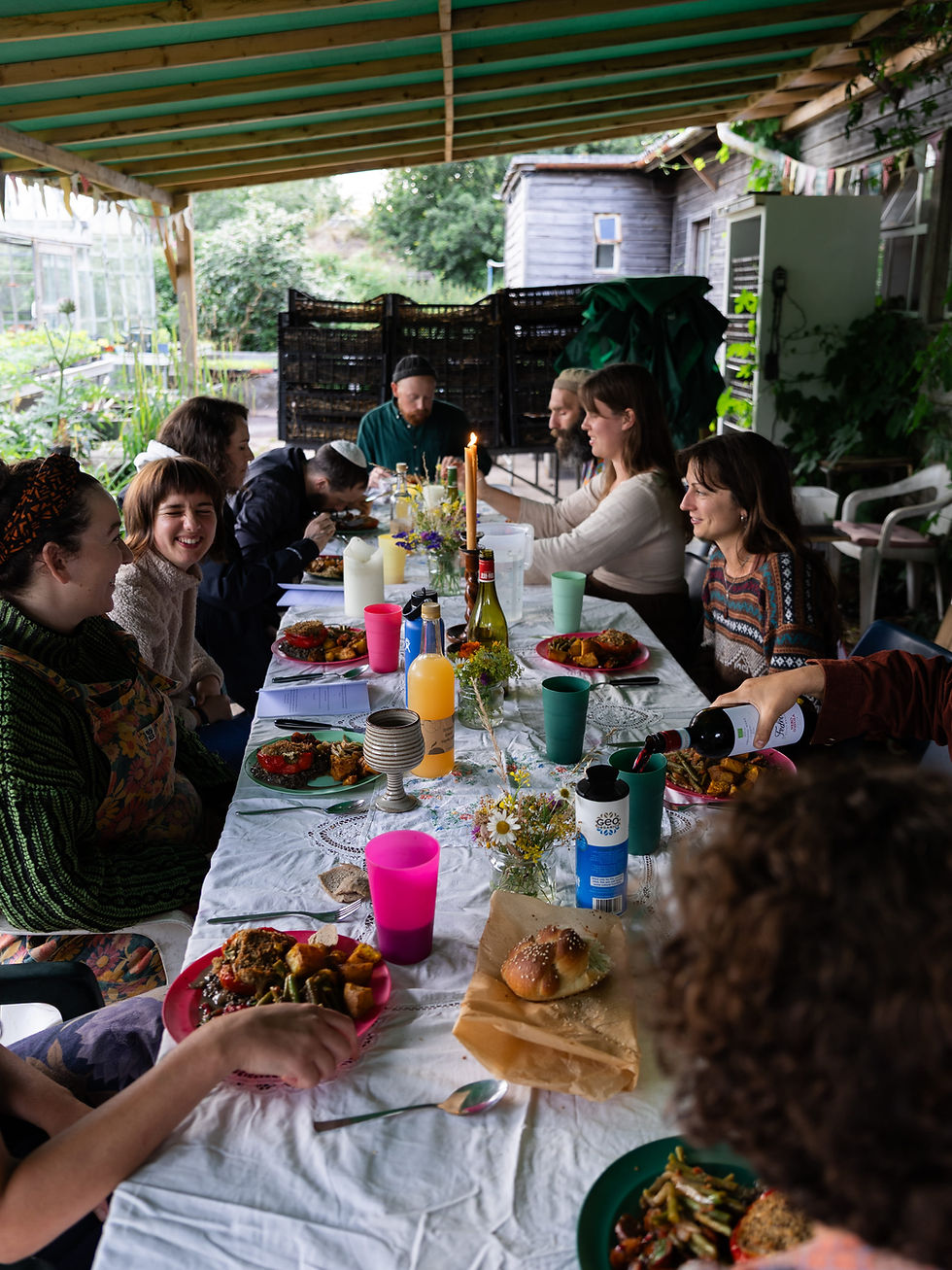
Miknaf Ha'aretz is now preparing for its fourth annual Radical Farm Camp in the southwest UK. The organisation is deepening its blend of agroecology, nature connection and Jewish agricultural practice, and beginning to explore how the model might extend to people from other marginalised backgrounds and identities.
And beyond that, there is a bigger dream. "We'd love to build a land project of our own," says Sara. "To be able to offer a home for this work."
The Miknaf Ha'aretz story is an illustration of what proactive, trust-based funding to early-stage and diverse organisations can set in motion. Broadening the agroecological movement, supporting smaller communities and giving them the tools to think strategically, change what the movement can become.
“It’s helping the movement grow towards its edges,” agrees Samson.
In uncertain times, organisations that seek to build bridges while also holding firmly to who they are, and who they're for, matter more than ever. Miknaf Ha'aretz is one of them.