Seeds of Change: The Network Reimagining Britain's Grain
Updated: Jun 8
Words by Pelin Turgut
Photos from UK Grain Lab
Most of us picture the ideal wheat field like a picture postcard: uniform rows, identical in height and golden hue, swaying gently in a breeze.
But that fairy tale image is misleading, the product of a modern farming system built on agrochemicals rather than natural diversity. The relentless pressure for yield has driven farmers towards monocultures, sustained by nitrogen fertilisers, herbicides and pesticides that eliminate anything that might compete.
Yet beneath this enforced uniformity lies enormous natural variety.
“Even the same cultivar of wheat can produce different quality metrics based on diversity of environment,” says Charlotte Bickler, an ecologist and coordinator of UK Grain Lab.
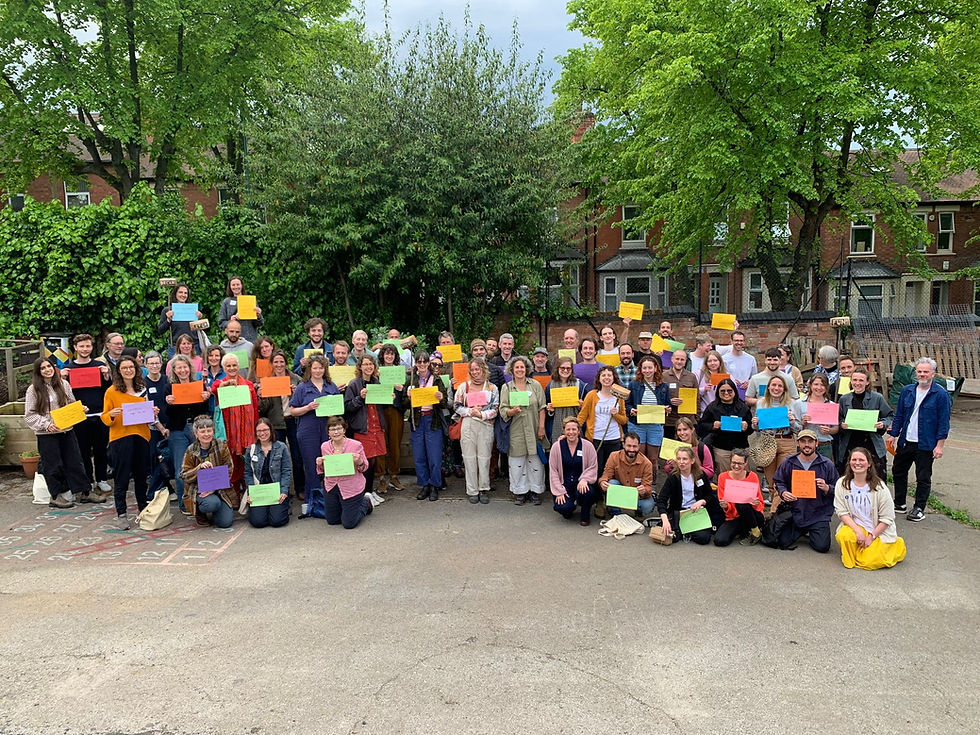
Formed in 2017, UK Grain Lab is a thriving network of bakers, millers, traders, farmers, activists, artists and academics across the UK who advocate for and work towards a more diverse, democratic and decentralised grain economy.
“We have a broad range of landscapes, soil types and geology across the country,” Bickler says. “Different regions will lend themselves to different crops. But at a more granular scale, farmers have fields that do well, different rotations, different routines, and then there’s the weather, so there’s a huge amount of diversity in the environment which farmers are trying to manage. Our approach is to build in diversity; the conventional approach is to optimize and control the environment with agrochemicals.”
In almost a decade of slow, steady, organic growth, UK Grain Lab realised that building a new food economy raises harder questions than simply growing different wheat. “What we want to see is nuance and a diversity of approaches that can be responsive to the natural variation of the environment, from field to fork,” says Bickler.
How do you create the scaffolding of an alternative system without replicating the patterns of domination -of each other, and of nature - already embedded in the existing one?
Their response has been to be patient, deliberate and grounded in relationships.
Start with Seeds
The loose coalition of grain activists began with the seed, as all farming must. Choices made at this foundational stage determine the future of crops grown, as well as how they will be processed and eaten.
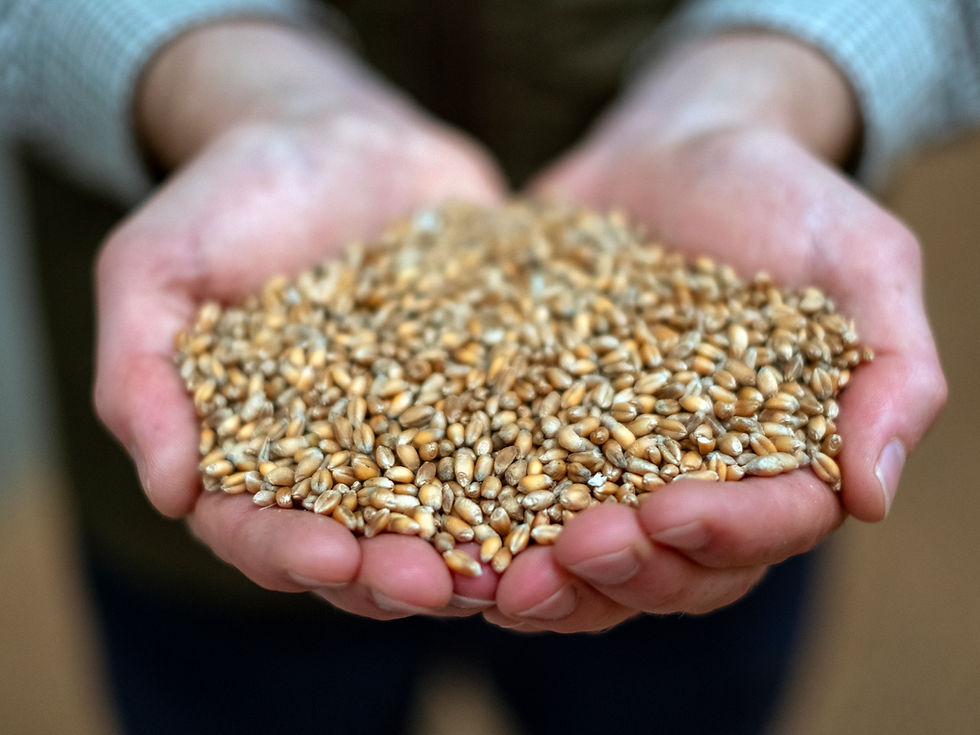
Historically, farmers would set aside some crop for the following year – this resulted in diverse and resilient seeds well adapted to local conditions. Modern farming systems dismantled that practice, making farmers dependent on a few large seed companies.
UK Grain Lab's first initiative, Save Our Seed, aimed to push back. The group received a small amount of funding from Farming the Future to explore best seed practices from breeders around the world in collaboration with the Landworkers Alliance and Gaia Foundation. When the pandemic struck, the focus shifted to unpicking how seed legislation needed to change to protect seed sovereignty. Through regular online meetings the group began to coalesce into an organisation which could represent those working on alternative grain economies, with a particular focus on genetically diverse seed, in the policy sphere, whilst also supporting grassroots action.
Testing, Refining & Relationship Building
Their next project, The Body Lab, tackled the journey from field to table. Working with Sheffield Wheat Experiment, Farmerama Radio and Small Food Bakery, and supported by modest funding from Farming the Future, they organised testing and tastings with farmers, millers and bakers, connecting people to grains they had often never thought about.
“The idea was that if we can build an understanding, and scrutiny, of the current testing processes around grain, we can also start to create opportunities for novel routes to market for farmers enabling them to grow resilient populations and what works best on their farm,” says Bickler.
One example of what this can look like is the South West Grain Network, where farmer Fred Price and others have trialled diverse wheats across biodiverse (weedy!) fields and engaged with European breeders in the field. This enabled the development of their own supply and milling capability and producing a flour that is authentically of its region: Organic True South West Flour.
“It has created a reliable market for farmers to sell more,” says Bickler.
What made The Body Lab transformative was not just the data it collected, but the relationships and mindset shift it forged. Farmers, millers and bakers who met through the project built friendships, and those friendships became the basis of trust, essential to any alternative economy that is not dependent on industrial metrics. Grain could move from farms to nearby mills and bakeries not through anonymous supply chains but through people who knew each other. Ultimately, the group was able to bring research and data to DEFRA, demonstrating the viability of diverse seed and associated markets. This challenged legislation that favoured monocultures and led to the implementation of new, yet temporary until 2030, seed policy.
A Big Leap Forward
“Working on smaller projects created engagement and built relationships,” says Bickler. “A lot of it has been about funders’ openness and patience around what’s happening. These pots helped galvanise a kind of synergy. Connecting people with strategic bits of money and ideas seems to work. It’s an important and efficient use of funding.”

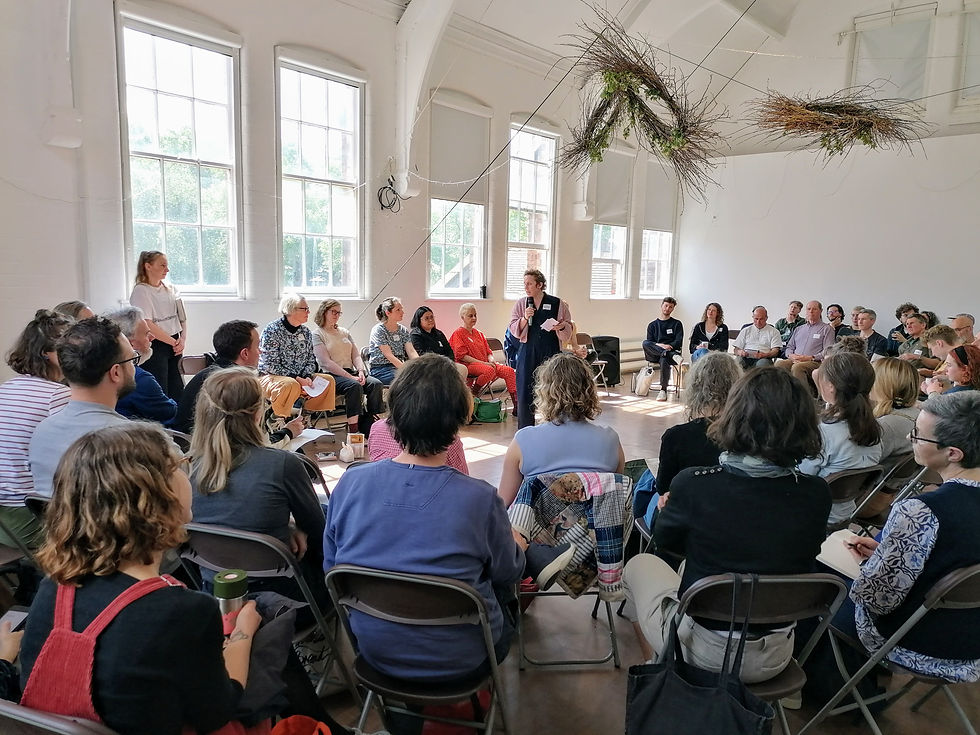
Into 2024, UK Grain Lab, with the support of Farming the Future’s Field Building Programme, has focused on organisational development and running convening events to strengthen the culture of the network. In 2025, they became a partner in RISE - Resilient Infrastructure for a Successful Emergence in the UK’s Grain Economy - a project building the foundations of an agroecological grain system across England, Scotland and Wales, tackling inclusion, organisational design, and the mobilisation of knowledge across regional groups.
This year brings their most significant milestone yet: a £200,000 grant from the DocuSign Foundation, secured over two years. The connection was made by Farming the Future through a chain of relationships with Fito Network, Healthy Food Healthy Planet and Social Change Nest.
“Docusign are helping us with upskilling and addressing organisational and practical challenges within localised initiatives across the network;” says Bickler. “We want to support what’s already emergent and direct support and resources towards that. Docusign will enable us to address structural agreements, or infrastructure, that need to be put in place to make it all work into the future.”
Looking to the Future
Ask Bickler to describe success, and her vision is specific and clear.
"You'd be walking through fields, and it wouldn't look like monocultures today. There will be wildlife. You would see more medium-sized mills, more businesses supporting a diverse range of arable crops, more direct and economically viable routes to market, and meaningful jobs that offer real economic security. You'd have access to healthy and tasty grain products in your local shops. The high streets would be more vibrant."
But she is also open about the obstacles. "There's so much power imbalance at the moment, which is why we're looking at different ways of organising - to shift how we as individuals and networks engage within the current system, and to make sure we don't fall into the old habits that have locked us into this position."
The postcard wheat field -golden, uniform, fed by agrochemicals- has shaped what we think grain is supposed to be. UK Grain Lab is betting that it doesn't have to stay that way.