Somerset wheat fields and a Manchester warehouse: one movement, two stories
Updated: Sep 21
Fred Price is in green dungarees, just back from walking his wheat fields at the foot of the Quantock Hills in Somerset. Sean Ruffell is still in an orange hi-viz vest from an early warehouse shift in Manchester. One tends 380 acres of cereals, pulses and pasture-raised pork in the rolling west country. The other runs Organic North from an industrial depot – one of the UK's largest and longest-established wholesalers of certified organic produce, supplying over 260 independent businesses across the country.
On the face of it, they couldn't be more different. But what they share is a deep-seated commitment to a more sustainable and equitable food and farming system in the UK. For the past two decades, they’ve been building ground-breaking businesses that offer an alternative to mainstream food production and distribution.

Two paths in
For Sean, the journey was accidental. He took a shift job at Organic North to replace hours at a local cake factory. Food was never the plan. "At first it was just to pay the rent," he says. "I was interested in music. I didn't want to be doing veg." But something shifted. "After a few years, I realised how important food is. I found it a radical thing - something I could apply my thinking about politics to. The political end is the impact we can have on the amount of land producing organic food, or the number of kids eating it."
Twenty-five years later, Organic North turns over approximately £8.5 million annually. It supplies wholesalers, retailers, individuals and six schools with organic fruit, vegetables, dairy, eggs, bread, oils, ferments and dry goods, from 75 UK suppliers. Growers abroad provide produce such as turmeric and ginger.
Fred's path was closer to home, though still winding. In 2007 he took over his aunt's farm in Somerset. At first, he ran it the way farms are commonly run: commodity-based, focused on yield, reliant on chemical inputs. Over time, as his "values and a sense of purpose" developed, he switched to an agroecological model, centered on soil health and eliminating agrochemicals. "I've tried to be very reflective about what the farm is doing, what part of the landscape it's in," he says. "It's not enough to employ the same logic as mainstream industry."
He now farms with a particular focus on seed, wheat and grain, building what he calls "relational supply chains". He founded the Southwest Grain Network and serves as UK director of Grain Lab - a thriving alliance of grain growers, millers and bakers that began as a single event near Nottingham in 2017 and has since seeded localised grain networks across the country.
Where Farming the Future comes in

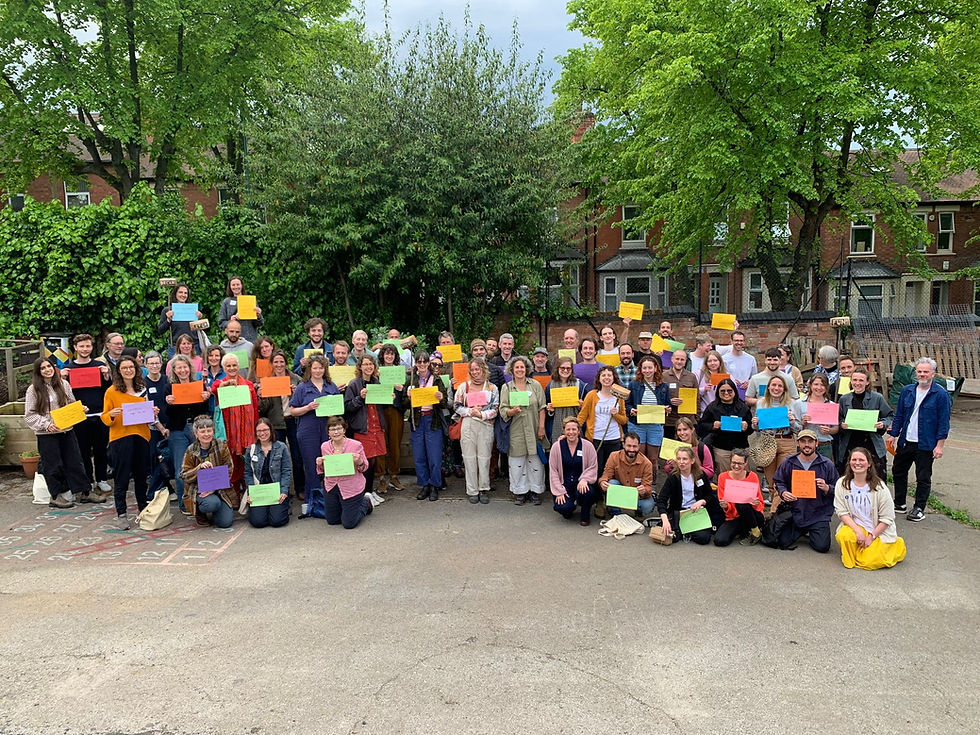
Both are Ambassadors for Farming the Future, and both point to the same thing when asked what it offers that’s unique: connection.
"Our two stories are personal, individual stories," says Price. "But sometimes when you're inhabiting our world, you can feel paralysed by the scale of what needs fixing. Change comes about not from scaling up these individual stories but by connecting them - when you create deep relationships across the supply chain, from producers to people eating it."
"It helps us feel less alienated," agrees Ruffell.
Sean is part of the Fruit and Vegetable Coalition, funded by Farming the Future — a UK-wide alliance of organisations representing organic and agroecological growers across all four nations. Its goal is to build a stronger policy voice for organic produce. He points to a forthcoming government organic produce action plan as an early sign of what collective advocacy can achieve. "It's the best-connected group of individuals representing organisations in our sector in the UK," he says.
For Fred, Grain Lab is a piece of infrastructure he considers essential to the broader movement. Farming the Future's support, he says, is key because it goes beyond project funding. "It resources people's capacity to spend time on governance, on upskilling, on creating an organisational culture. It enables an organisation to embody the change it wants to see."
Pushing the rock
Neither is under any illusion about the difficulty of what they're doing.

For Sean, the hardest years are behind them. The main outstanding challenge is insecure tenancy of their council-owned warehouse, but with enough savings accumulating, they're close to buying their own depot, which will allow them to bring prices down further. They already operate on a 15% profit margin.
The other challenge is structural: gaps in UK organic production that no wholesaler can fill alone. "There's next to no organic berries grown here anymore," he says. He is hopeful that a change in government policy will encourage more growers to switch to organic or incentivise them to switch.
Fred's challenges are different. "Most of them relate to operating within a socioeconomic and political system that we're trying to change," he says. "Running a different kind of business with a different set of values is marginal, no matter how good you are. The system has a lot of inertia." There's the perennial question of food cost and access - bakers often ask who a £4.50 loaf is actually feeding - and the particular barriers of arable farming, which demands capital and land at a scale that keeps it, as he puts it, "very non-inclusive and very non-diverse".
The solution, he says, is straightforward. "We need more money flowing into this sector- unrestricted, multi-year funding for people, not things or outcomes. At the moment, Farming the Future is the only organisation holding that. The need is acute and the resources are tiny. It would be so easy with a bit more funding."
A movement that doesn't call itself one
Ask Sean whether he considers himself part of a broader agroecology movement and he smiles. "It's like Fight Club," he says. "The first rule of being part of a movement is not to talk about being in a movement. Because it can sound scary."
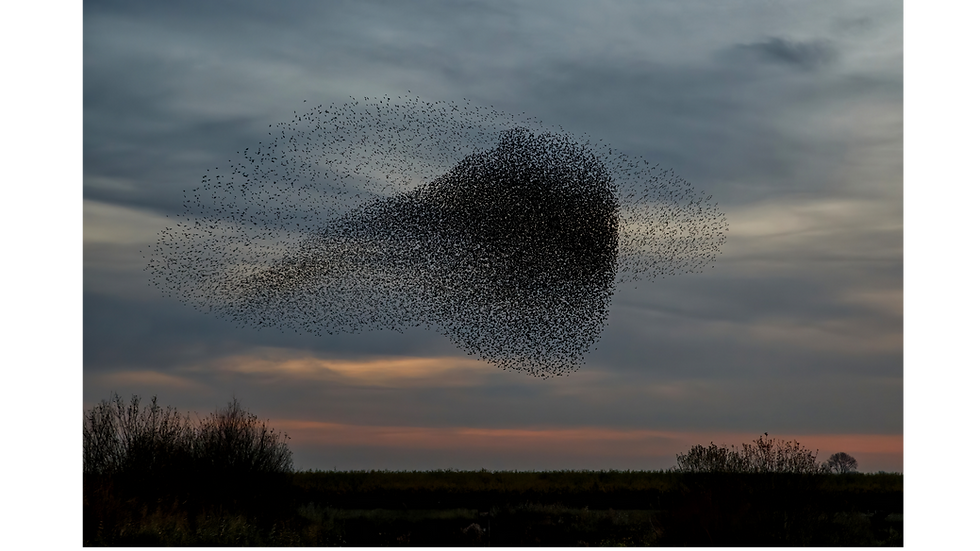
Fred reaches for a different frame. "What we're part of is more like a life cycle," he says. "Non-linear, emergent and decentralised, not hierarchical. It's about living as part of the planet rather than living on the planet - that's what unites anyone I've come across in this sector. A dissatisfaction with the status quo. On the ground there's a load of people with a strong sense of purpose whose businesses share a set of values and who are working really hard to embody those."
Wheat fields in Somerset. An industrial warehouse in Manchester. And one thread that connects them both in the urgent, necessary work to change how we grow our food and eat. Join Fred and Sean by supporting the Farming the Future collective as a funder member. Find out more here.